+86 134 8948 6615

This article outlines the process of making stone countertops using a 5-axis bridge saw, focusing on precision cutting, material selection, and the advantages of using this technology. Key steps include CAD design, cutting, polishing, and finishing, along with industry trends and regulatory considerations.
This article explains how countertops are made using a 5-axis bridge saw, covering the entire manufacturing process from material selection and CAD design to cutting, polishing, and finishing. It highlights the precision and efficiency of 5-axis technology in producing high-quality stone countertops. Learn about the advantages, key materials like granite, marble, and quartz, and the latest industry trends, compliance, and choosing the right supplier.
Introduction
Countertops are an essential element of any kitchen or bathroom, and stone materials such as granite, marble, and quartz are often the top choices for their durability and aesthetic appeal. The process of crafting these countertops requires precision, speed, and quality, making the 5-axis bridge saw the ideal machine for the job.
A 5-axis bridge saw allows manufacturers to create intricate cuts, curves, and precise shapes that are impossible with conventional machines. By leveraging this advanced technology, manufacturers can produce countertops with exceptional quality and consistency.
In this article, we will explore how a 5-axis bridge saw works to make countertops, the advantages of using this technology, the materials used, and the steps involved in production. Additionally, we will discuss industry trends, regulatory requirements, and offer insights into choosing the right supplier.
What Is a 5-Axis Bridge Saw?
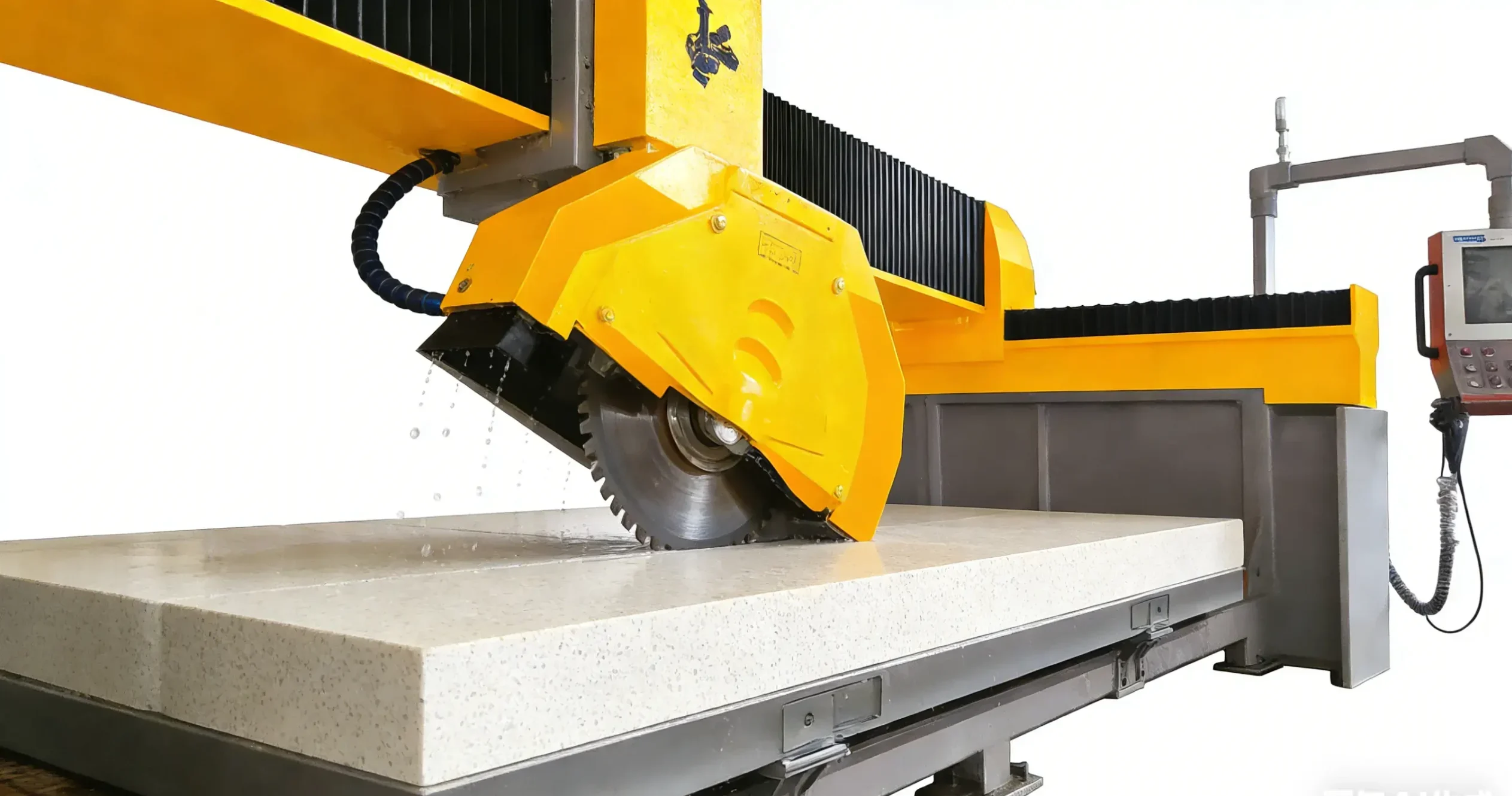
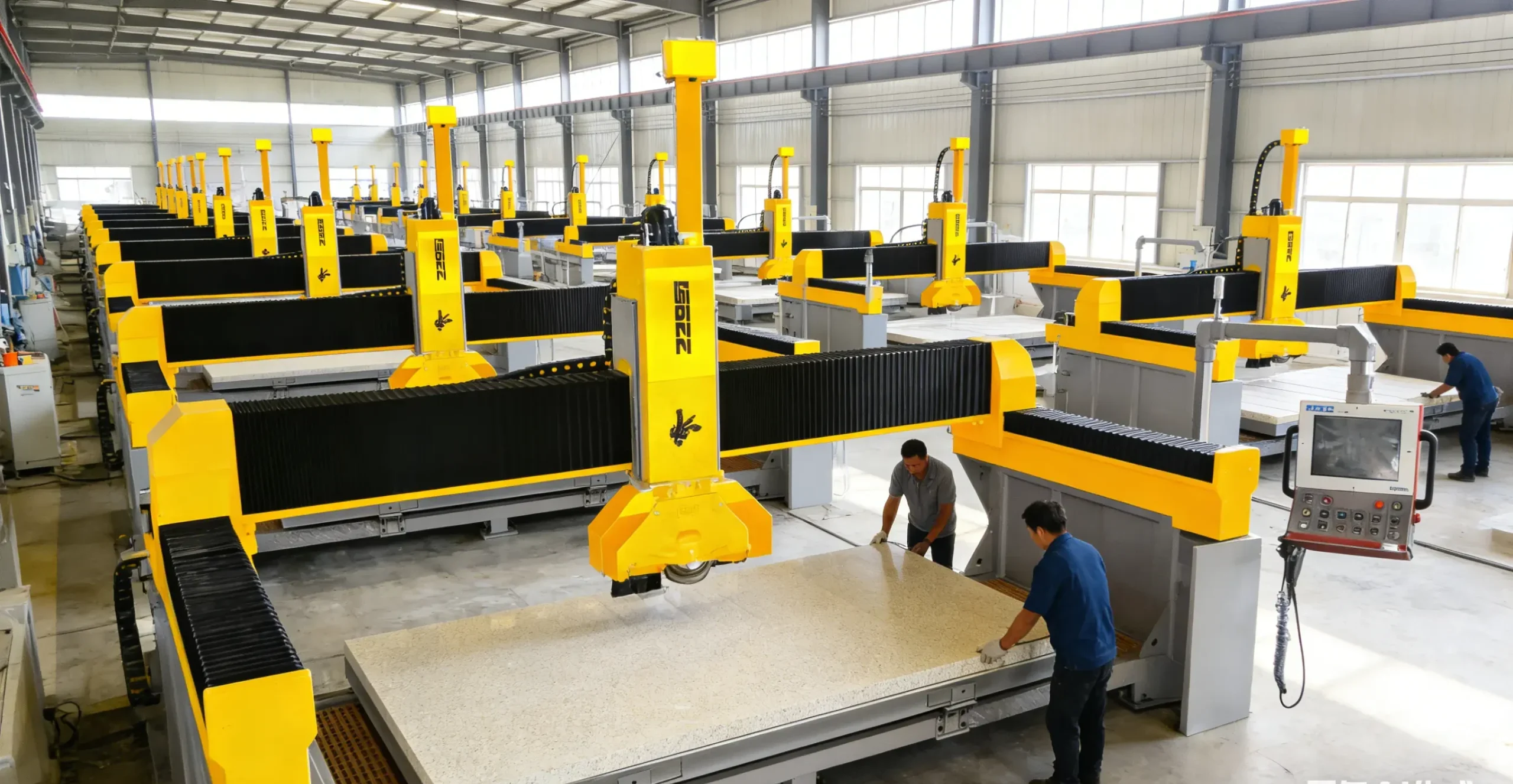
A 5-axis bridge saw is a state-of-the-art CNC (Computer Numerical Control) machine used for cutting and shaping stone, granite, marble, quartz, and other solid materials. It operates with five axes: X, Y, Z for the movement of the stone, and A and C axes for tilting and rotating the blade. This multi-axis movement allows the machine to cut complex shapes, angles, and curves without needing to re-position the stone.
The precision and flexibility of a 5-axis bridge saw are critical for producing high-quality countertops, which require intricate cutting and smooth finishes.
Key Features of a 5-Axis Bridge Saw:
-
Cutting Depth: Up to 300mm
-
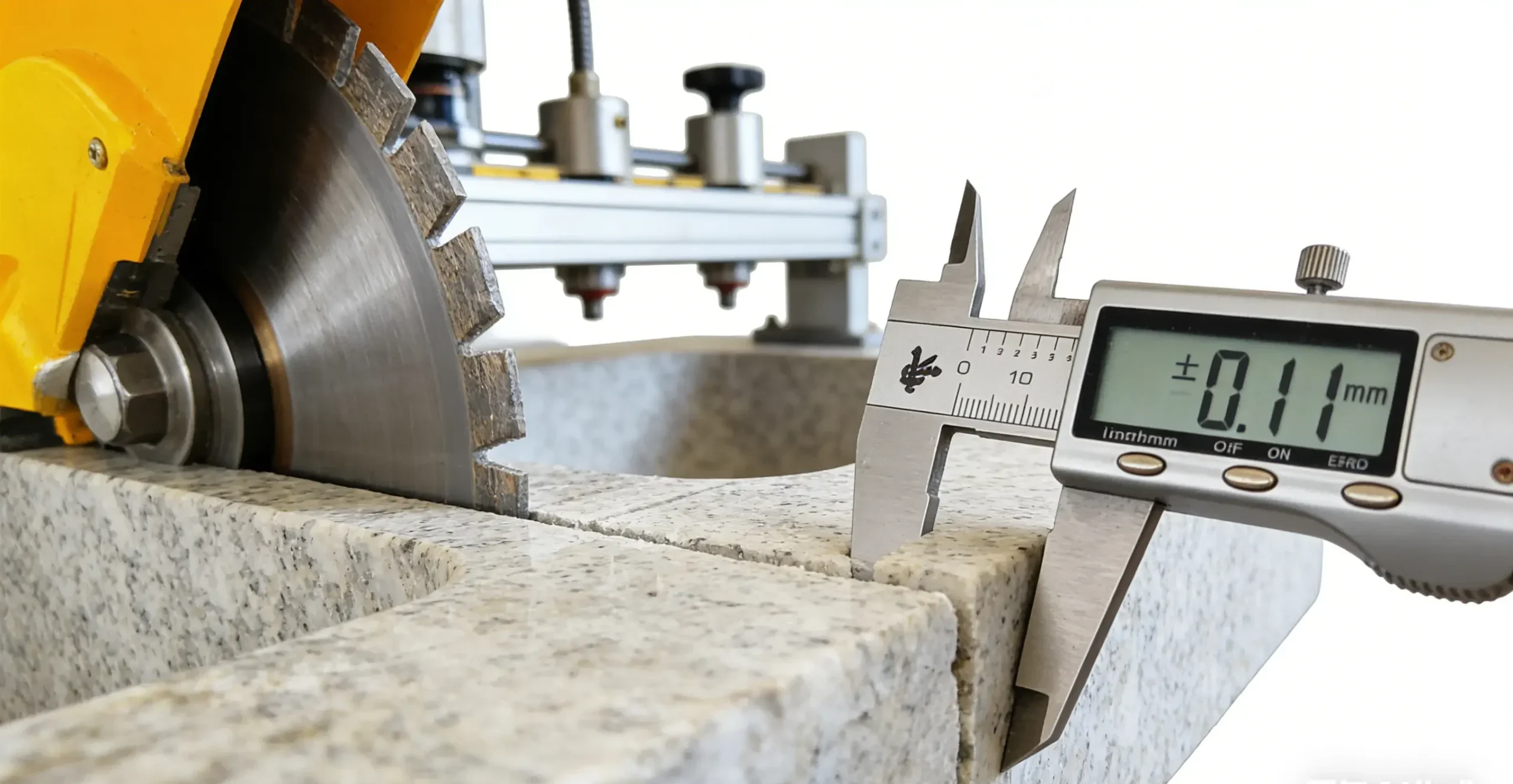
Positioning Accuracy: ±0.1 mm
-
Repeatability: ±0.05 mm
-
Spindle Power: 15–30 kW
The Process of Making Stone Countertops with a 5-Axis Bridge Saw
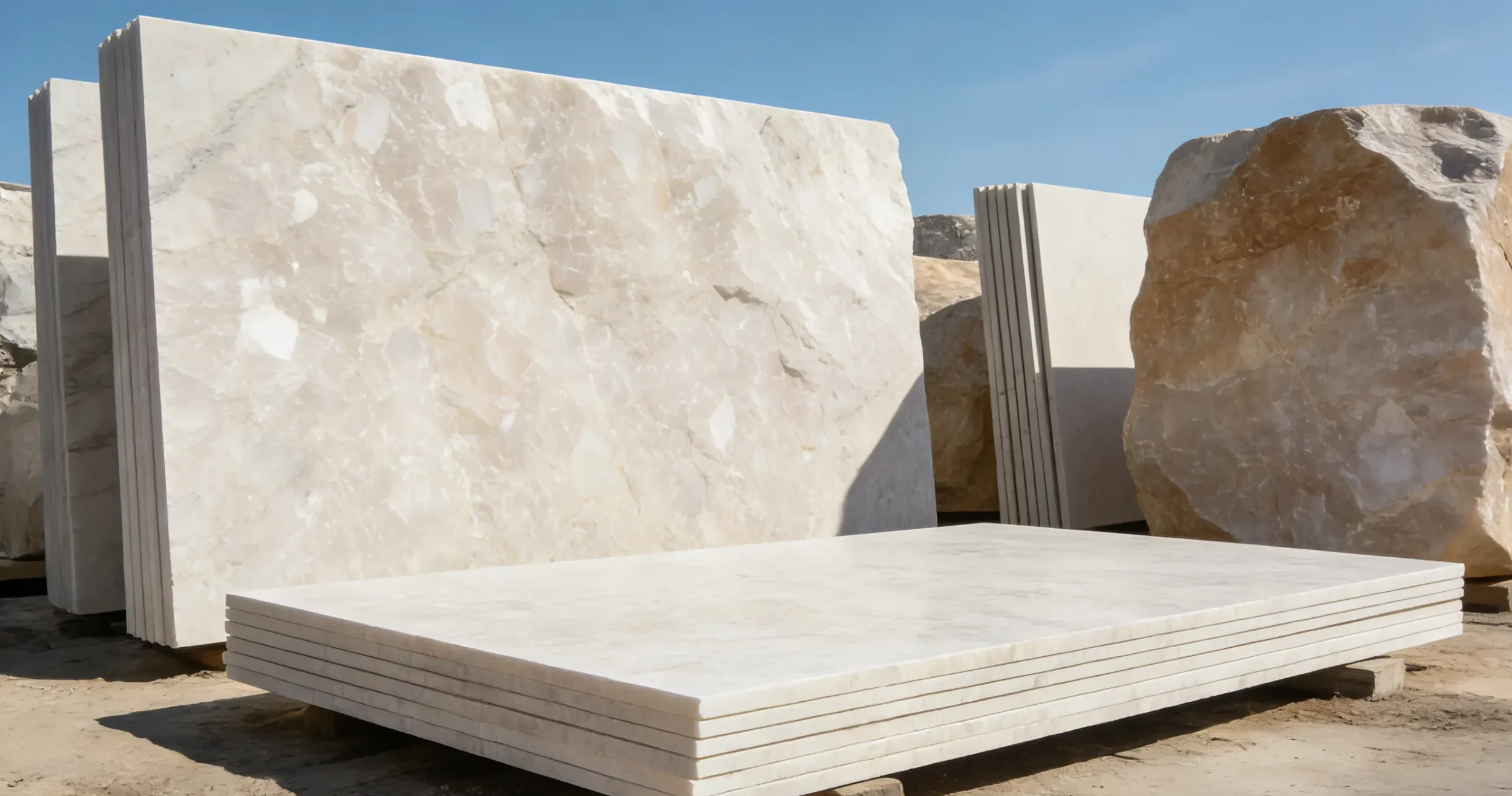
Step 1: Stone Block Selection
Stone materials such as granite, marble, or quartz are selected based on the desired aesthetic and durability for the countertop. The block size typically ranges from 2 to 3 meters in length, with a weight of up to 2 tons. The quality and uniformity of the stone are crucial factors that will affect the overall finished product.
Step 2: CAD Design and Toolpath Programming
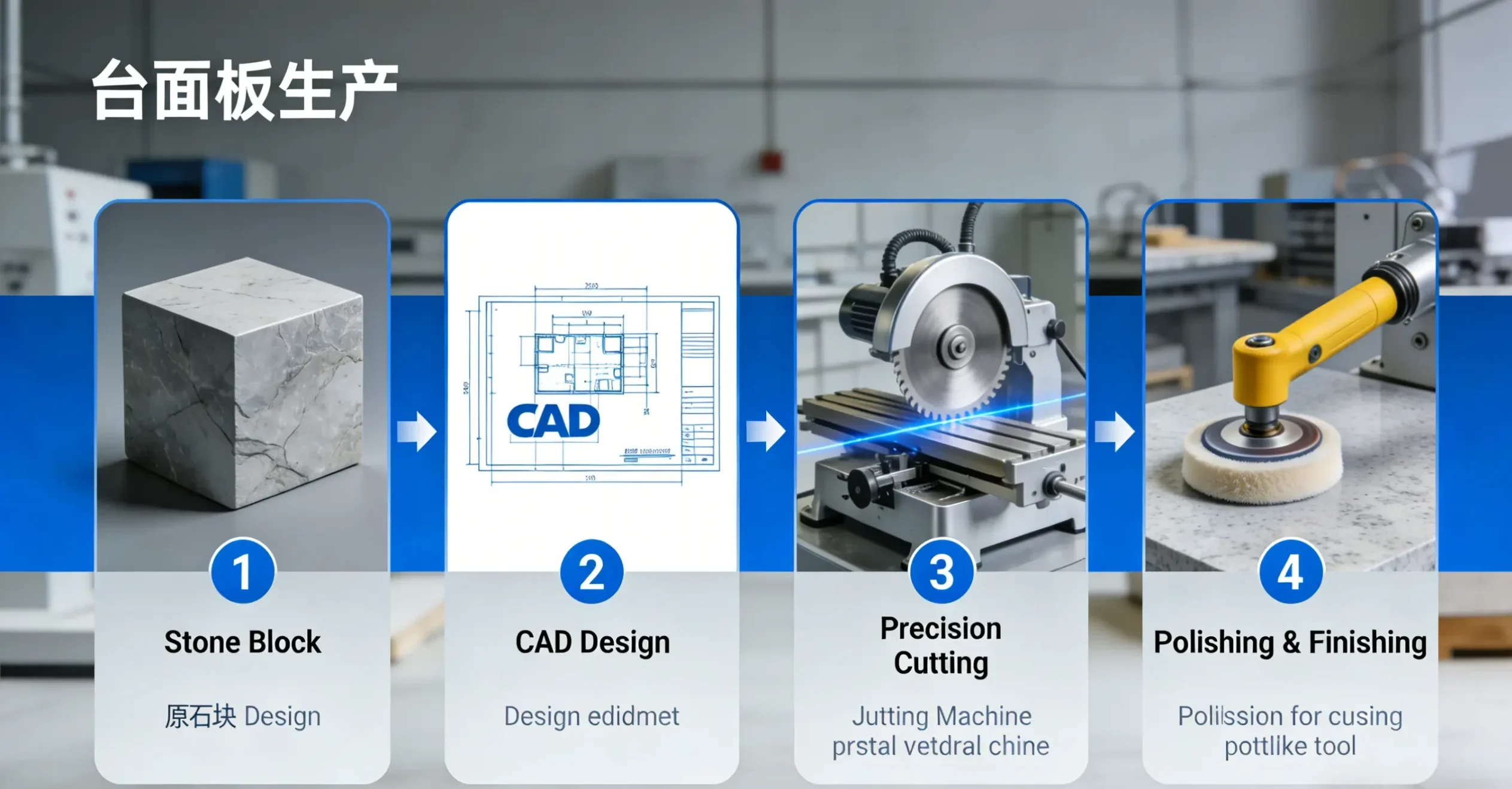
Before any cutting begins, a CAD (Computer-Aided Design) model of the countertop is created. This design includes the dimensions, shapes, and any additional features such as sink cutouts or edge profiles. The design is then translated into toolpath programming, where the 5-axis bridge saw is programmed to cut according to the specific angles, depths, and contours required.
Step 3: Cutting the Countertop
Once the stone block is secured on the machine bed, the 5-axis bridge saw begins its cutting process. The machine uses its multi-axis capabilities to:
-
Cut intricate curves and straight lines
-
Make precise cuts for sink and faucet holes
-
Achieve smooth, uniform edges
The ability to cut from multiple angles in one setup reduces the need for multiple re-clamping, improving production efficiency and accuracy.
Step 4: Polishing and Finishing
After the initial cutting process is completed, the countertop is polished to remove any rough edges and to give it a smooth, glossy finish. This step can be done using dedicated polishing equipment or additional processing on the same machine, depending on the factory’s capabilities.
Step 5: Quality Control
Finally, a thorough inspection is conducted to ensure that the countertop meets the required specifications, such as the right dimensions, edge profile, and overall surface quality. Common quality checks include:
-
Measuring thickness tolerance (±1mm)
-
Ensuring the uniformity of the surface (Ra ≤ 6.3 μm)
-
Checking for defects or cracks in the stone
Materials Used in Countertop Manufacturing
-
Granite: Known for its strength and resistance to heat and scratches, granite is one of the most popular choices for countertops.
-
Marble: Offers elegant and luxurious aesthetics, though it is more prone to scratching and staining compared to granite.
-
Quartz: Engineered stone made from natural quartz crystals, offering a wide range of colors and patterns while being durable and low-maintenance.
Material Performance Comparison
| Material | Water Absorption (%) | Compressive Strength (MPa) | Durability |
|---|---|---|---|
| Granite | 0.1–0.4 | 130–250 | High |
| Marble | 0.2–0.6 | 70–140 | Medium |
| Quartz | <0.1 | 150–200 | Very High |
Advantages of Using a 5-Axis Bridge Saw for Countertops
Precision and Accuracy
With a 5-axis bridge saw, manufacturers can achieve micron-level accuracy for cutting countertops. This is essential for creating smooth edges, perfect cutouts, and precise dimensions.
Increased Efficiency
The ability to cut multiple shapes and sizes in a single setup minimizes the need for repositioning and re-clamping, speeding up the production process and reducing labor costs.
Versatility
A 5-axis bridge saw can be used for a variety of cutting tasks, including creating intricate designs, bevels, and custom edge profiles. Its flexibility makes it ideal for both high-volume production and custom countertop projects.
Industry Trends and Market Insights
The countertop industry has seen significant changes over the years, with increasing demand for customization, sustainability, and efficiency. Many stone manufacturers are adopting 5-axis bridge saw technology to meet these demands, offering more precise and varied designs. Additionally, the market is moving toward more sustainable practices, such as using water-efficient cutting systems and recycling slurry waste.
As the demand for high-quality countertops grows, China suppliers and manufacturers specializing in 5-axis bridge saws are increasingly sought after due to their competitive pricing and high-quality production capabilities.
Regulatory Compliance
Stone countertop manufacturers must comply with several international standards:
-
CE Machinery Directive (EU)
-
OSHA Silica Dust Standards (USA)
-
ISO 12100 Machinery Safety
-
EN 12472 Surface Safety Requirements
FAQs
1. What materials can be cut with a 5-axis bridge saw?
A 5-axis bridge saw can cut a variety of materials, including granite, marble, quartz, and engineered stone.
2. How accurate is a 5-axis bridge saw?
The machine has a positioning accuracy of ±0.1mm and repeatability of ±0.05mm, which ensures highly precise cuts.
3. How long does it take to cut a stone countertop with a 5-axis bridge saw?
The cutting process typically takes 2–6 hours, depending on the complexity of the design and the size of the countertop.
4. What is the lifespan of a 5-axis bridge saw?
With proper maintenance, a 5-axis bridge saw can last up to 15–20 years, depending on usage.
5. Can a 5-axis bridge saw handle large countertop slabs?
Yes, it is capable of handling large slabs, with cutting capacities up to 3 meters in length and 1.5 meters in width.
The 5-axis bridge saw revolutionizes the countertop manufacturing process by offering superior precision, increased efficiency, and versatility in cutting intricate shapes and designs. With the ability to handle various materials like granite, marble, and quartz, it ensures high-quality results in both custom and mass production settings. As global demand for quality countertops rises, choosing the right machine and supplier, such as those from China, is crucial to staying competitive in the industry.
Previous News
How to make countertops by 5-axis bridge saw?Next News
What Is a 5-Axis CNC Stone Cutting Machine and ...Feature Product
-
 Durable Custom Backpack – Stylish, Functional, ...
✅ Key Features Premium Material: High-quality...